“Pounding rhythms, cascading chords, spiralling swirls of fast notes […]a dizzying perpetual-motion toccata. Mr. Tiempo gave a scintillating and virtuosic performance.”
—— The New York Times
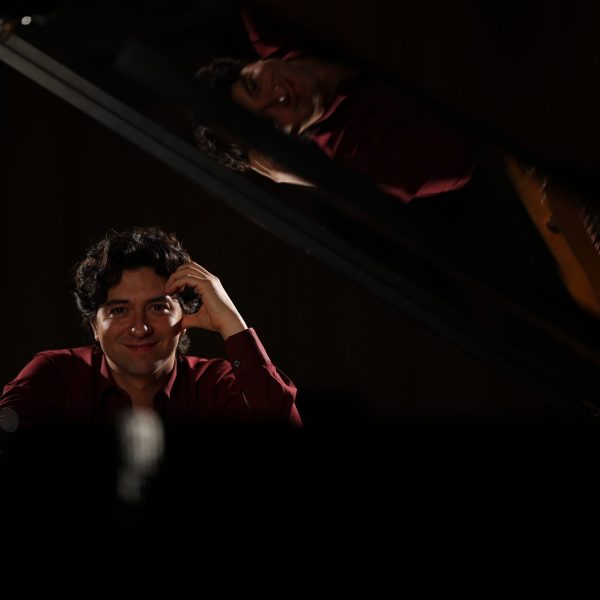
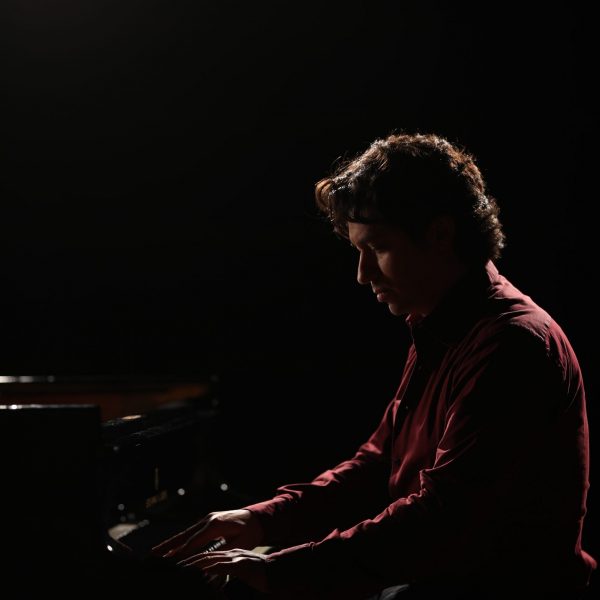
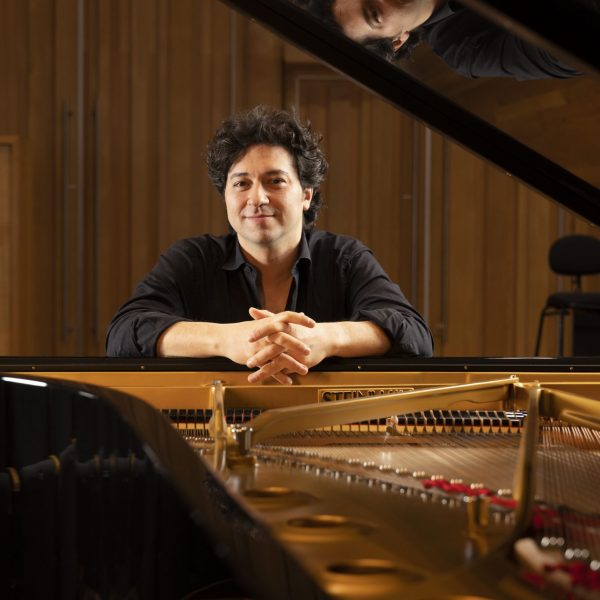
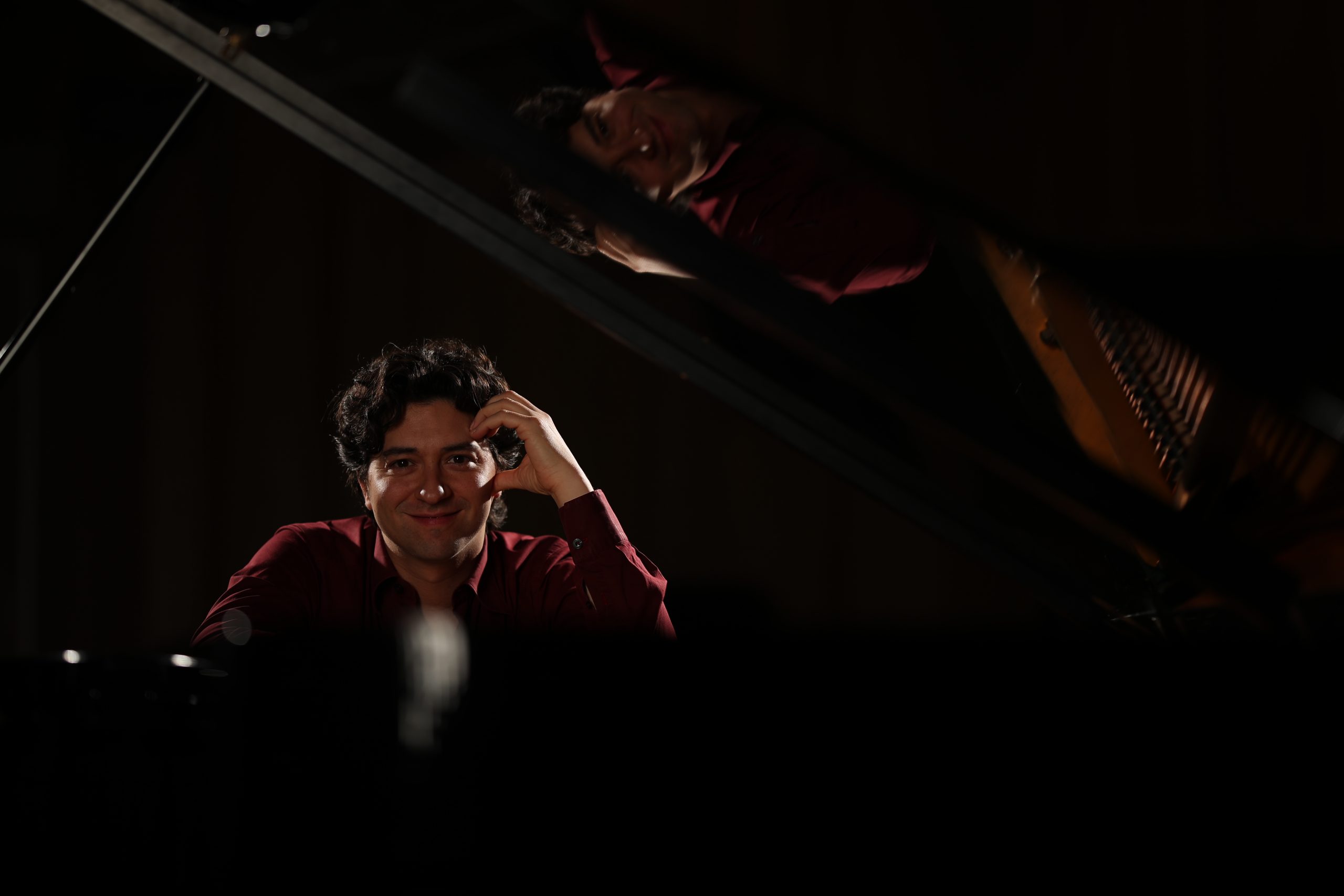
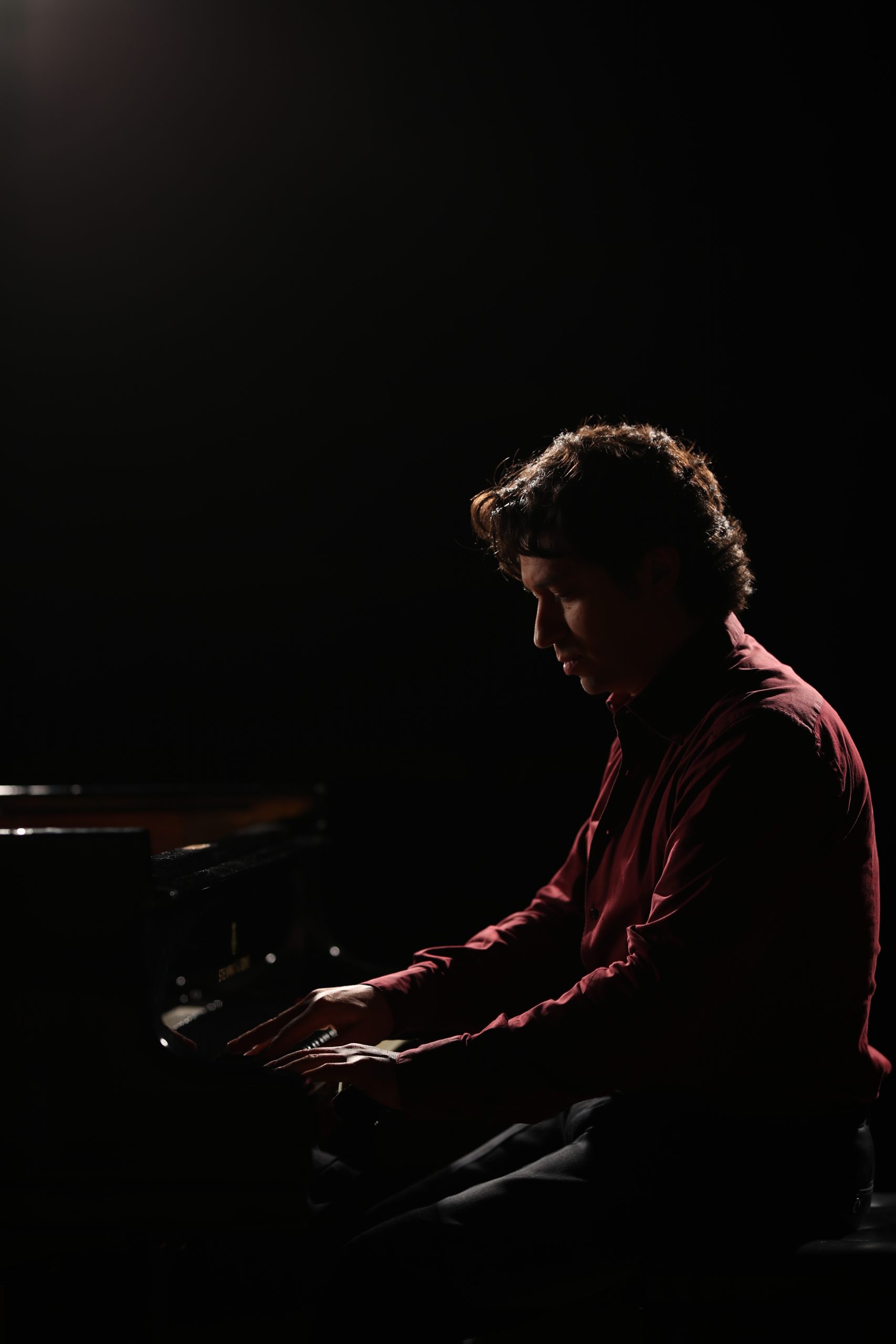
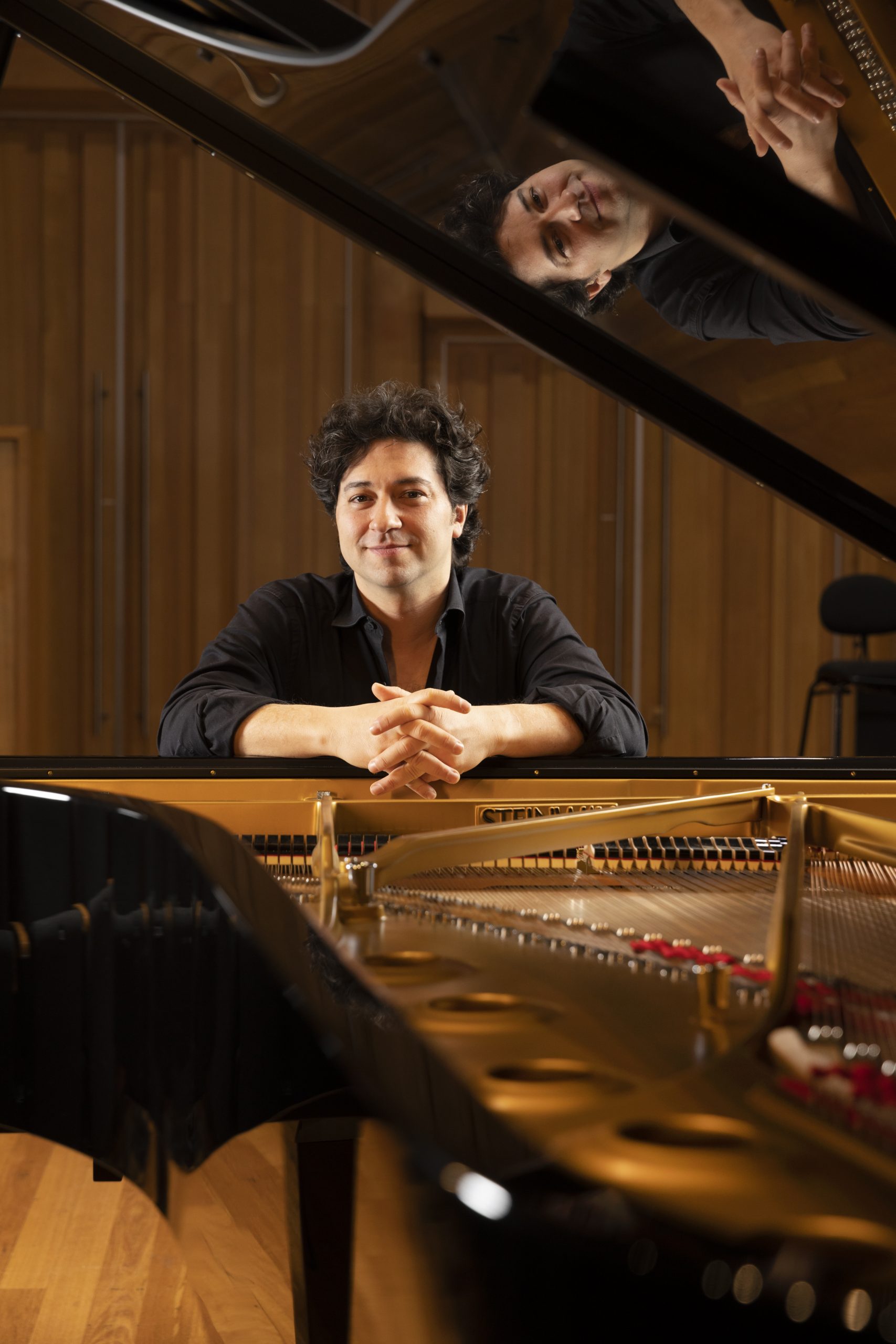
Born in Caracas, Venezuela, the Argentine pianist Sergio Tiempo grew up in a family immersed in music, an environment that profoundly shaped his future path. At the age of three, he began piano lessons with his mother Lyl De Raco, before continuing his studies at the Fondazione per il Pianoforte in Como, where he worked with Dmitri Bashkirov, Fou Tsong, Murray Perahia, and Dietrich Fischer-Dieskau.
Since his father, Martín Tiempo, maintained a longstanding friendship with Martha Argerich and Nelson Freire, Sergio Tiempo received further artistic inspiration and guidance from both musicians, who became his significant mentors. Through direct work with Argerich during his teenage years, Tiempo made his highly acclaimed debut at Amsterdam’s Concertgebouw at the age of fourteen. With a musical versatility ranging from Beethoven, Chopin, and Prokofiev to Villa-Lobos and Ginastera, he soon achieved international recognition.
How did your journey as a pianist begin?
My Mom, Lyl De Raco, and her parents were all pianists. Being a fantastic pedagogue for children, she attracted an enormous number of young pianists to our house in Venezuela. Since my elder sister was also an advanced pianist, our home was a non-stop musical powerhouse from morning till night. In such a context it was unimaginable that I would be left out. Apparently, at two years old, I asked my Mom, “Why am I the only one not getting lessons from you?” So, a couple of months before I turned the ripe age of three, I started my “official” piano lessons.
How did your growing background shape your artistic and performing style?
I was lucky to have a very broad musical upbringing. Classical music was naturally at the centre of it, but my Dad was also a big fan of jazz, Bossa Nova, and Tango. So my ears were always open to other musical languages. On top of that, he was a close teenage friend of Martha Argerich and Nelson Freire, and my parents constantly had musician friends staying with us — among them Rafael Orozco, Bruno Gelber, Charles Dutoit, Stephen Kovacevich, Daniel Barenboim, and of course Martha and Nelson. Even when I wasn’t getting direct lessons, I was listening to their practising, their conversations, their musical tastes… What better cradle could a child have? It’s like being a writer and growing up with Shakespeare, Goethe and Borges in your house.
Martha Argerich has played a pivotal role in your musical path. Could you tell us how you first met her and what your collaborations have been like?
My Dad, Martín Tiempo, was a very close friend of hers. As an Argentine diplomat he lived in Switzerland at the same time Martha and Nelson were studying in Europe — in fact, they were all living together in his tiny apartment. Since he was the only one earning money, they basically depended on him to survive. Martha once told me, laughing, that my Dad got paid at the beginning of the month, so they would treat themselves to huge feasts… and by the end of the month, when everything was gone, they survived on sauceless pasta. But they had so much fun!
I first met Martha literally as a newborn — she was there when I was born — but I only fell in love with her playing around age 10, when I first heard her recordings. I became obsessed and tried to imitate everything. Then I had the unbelievable good fortune of actually playing for her and receiving her guidance. She helped me prepare the recital program for my first concert at the Concertgebouw in Amsterdam at 14.
That was just the beginning. Her lessons were so extraordinary that it was almost shocking to eventually find myself playing with her in public. Terrifying and thrilling in equal parts!
Mischa Maisky was one of your first chamber music partners, and you have recorded several albums together for Deutsche Grammophon. How did the two of you decide to form a chamber partnership, and are there any memorable experiences from performing with him?
My first and longest chamber partner was — and still is — my sister, Karin Lechner. But it’s true that my very first collaboration with another instrumentalist was with the cello giant Mischa Maisky.
That happened thanks to Martha, who kept telling me I needed to do more chamber music. It was she who suggested I should play with Mischa. I thought she was completely mad — how could my first chamber music partner be one of the best cellists of all time!
A few years later, I suddenly got a call from Mischa himself, asking if I’d like to play the Chopin Sonata with him in Belgium. After my initial heart attack, I said yes and immediately panicked, furiously learning the demanding piece. Martha, who was our next-door neighbour in Brussels, listened to my practising. One day she phoned Mischa and simply said, “He’s ready.” She virtually dragged me from the piano and took me to his place for our first rehearsal — she even turned pages!
That was the beginning of a lifelong friendship and musical dialogue. I will never have enough words to thank Martha for it.
You have a long-standing friendship with Gustavo Dudamel and have collaborated with him frequently, including your debut with the Berlin Philharmonic. Could you share your thoughts on him, and are there any upcoming projects you plan to work on together?
I met Gustavo in Buenos Aires in 2005, at the Martha Argerich Festival. He wasn’t yet the cosmic superstar he is today, and he was conducting the Simón Bolívar Orchestra in several concerts. The opening concert had Martha playing Prokofiev 1 and me playing Tchaikovsky 1 with him.
From the very first rehearsal we had a natural chemistry. We basically went through the whole concerto without stopping and suddenly realised it had been flawless. Out of professional duty we repeated a few spots, but it honestly wasn’t necessary.
Aside from this perfect musical combination, we became extremely close — he is family to me. We’ve played together countless times, and with his new position as Chief Conductor of the New York Philharmonic, we’re already planning several projects.
Could you describe your experience performing with the Berlin Philharmonic?
I couldn’t believe it when I received the invitation to play with one of the most extraordinary orchestras in the world. I was intimidated, of course. In my mind they were all much older — the image I had from my childhood. Instead I discovered that I was probably older than most of them, and their warmth and sublime playing carried me on a cloud of bliss throughout rehearsals and concerts.
It was unforgettable and deeply instructive.
Aside from your appearance with the Berlin Philharmonic, could you share some of the most unforgettable performances in your career?
There are so many! But to name a few: my first performance of Rachmaninov’s Third Concerto in Stavanger with Alexander Dmitriev at age 18 — a complete out-of-body experience where it felt as if nothing could go wrong.
I will also never forget my first recital with Martha; the electricity of that moment is still tingling decades later. My experiences with Mischa, with Gustavo and the Simón Bolívar Orchestra, and later with Santa Cecilia, Bamberg, Los Angeles and the New York Phil are all indelible memories.
Another cherished moment was recording “Hommage” with Nelson Freire. His way of making music always moved me beyond limits, and actually playing with him was one of the most beautiful moments of my life. I could go on for pages…
Could you talk about commissioning new works?
Although I’ve had the good fortune of premiering wonderful music, I have only commissioned one work myself: the Tango Rhapsody by Federico Jusid. This rare two-piano and orchestra piece has everything — passion, tenderness, anger, humour, even acting! My sister Karin and I premiered it in Lugano at Martha’s festival years ago, and I’m always delighted when we get to play it again.
I’ve also had the opportunity to premiere Esteban Benzecry’s Universos Infinitos and Constelaciones del Tiempo, in Los Angeles with Gustavo and in São Paulo with the São Paulo Chamber Soloists, respectively.
What recording projects do you have planned for the future?
I am currently working on a recording about love. I can’t reveal too many details yet, but I want to dedicate it to my wife… shhhh, she doesn’t know yet.
You have performed across Asia, Europe, and North and South America. What new goals or directions would you like to explore next?
I’ve never been very good at projecting myself into the future — even less at planning what to explore. Life and music are unpredictable to me, and that’s exactly what makes them irresistible.
Sergio Tiempo is represented in Generalmanagement by Tanja Dorn at Dorn Music.
This approved biography is not to be altered or shortened without the management’s permission. Please replace older versions.
July 2026